Share
Strength Starts Here: Why Grip is the Gateway to Greatness
Most athletes train around their grip without ever training it directly. They chalk up, wrap their wrists, and move on to the work that feels more important. Squats, pulls, presses, conditioning. Grip is an afterthought.
That's a mistake backed by decades of research.
What the Science Actually Says
Grip strength is one of the most reliable predictors of overall athletic output and long-term health in existence. Not bench press. Not VO2 max. Grip.
A landmark study published in The Lancet Public Health tracked hundreds of thousands of people across multiple countries and found that grip strength predicted cardiovascular health, musculoskeletal function, and even longevity more reliably than many conventional health markers. The researchers weren't studying powerlifters. They were studying the general population, and grip kept surfacing as a signal of systemic physical health.
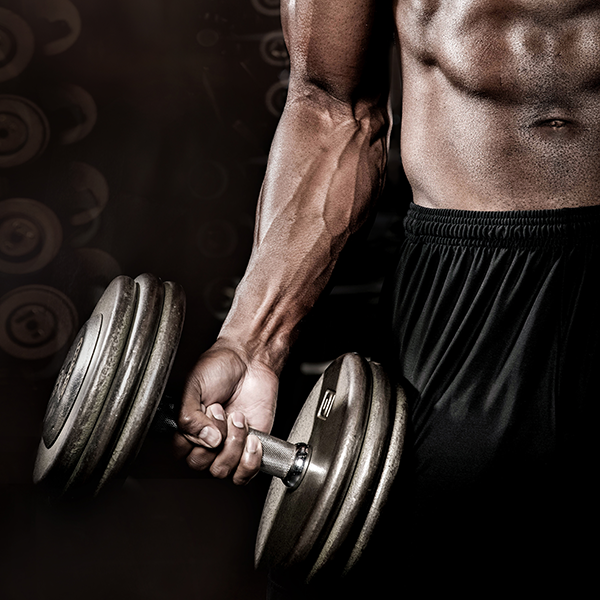
In the gym, the implications are direct. Research published in the Journal of Strength and Conditioning Research found that grip strength correlates strongly with total body muscle performance. Athletes with stronger grips produce more force, sustain output longer, and recover more efficiently between sets. Your grip isn't just the thing that holds the bar. It's a proxy for everything else.
Why Grip Fails Before You Do
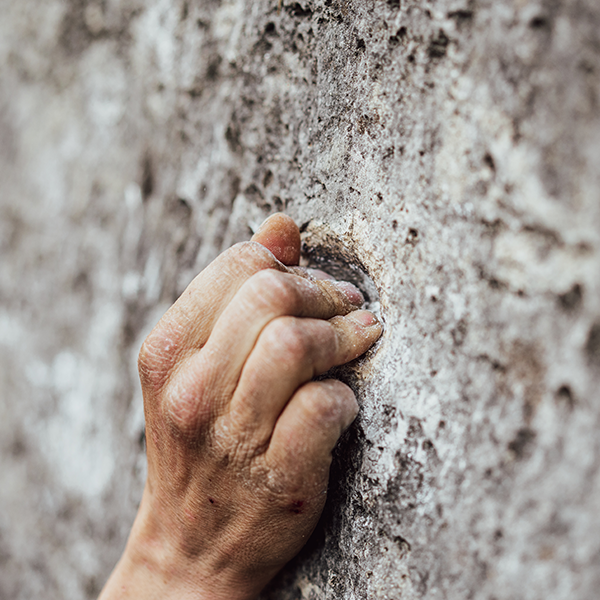
Here's what actually happens on a heavy deadlift, a long set of pull-ups, or a late-round climbing sequence. Your legs have more left. Your back has more left. Your grip gives out first and the set ends before your target muscles are finished working.
This is grip as a limiter, and it's more common than most athletes realize. Every rep you cut short because your hands gave out is a rep your posterior chain, your lats, your core never finished. Grip isn't just a performance variable, it's a ceiling on everything above it.
Removing that ceiling starts with two things: deliberate grip training and consistent chalk use. The training builds capacity. The chalk removes the friction that robs you of it mid-set.
The Chalk Variable
Chalk doesn't make you stronger. It removes a variable that makes you weaker.
Sweat reduces friction. Reduced friction increases perceived effort, disrupts technique, and triggers the grip anxiety we covered in our psychology post. Your nervous system registers an unstable grip and diverts attention to managing it. That cognitive tax costs you reps, focus, and over time, progress.
Super Grip Chalk absorbs moisture at contact, maintains friction through an entire set, and eliminates the mental overhead of wondering whether your hands will hold. Combined with the Clean Chalk Pod's precision application, you're chalking up once and training through. No re-chalking between sets. No interrupted flow. No ceiling you didn't have to hit.
Start Where Everything Starts
The athletes who understand grip train it like any other performance variable. Intentionally, consistently, and with the right tools.
Add farmer carries. Add dead hangs. Add towel pull-ups. And chalk up properly every single time, not as a ritual, but as a performance decision.
Your grip is the first point of contact between you and every movement you'll ever train. Treat it accordingly.
Clean Chalk. Built for the last rep.